Part 1: The Anatomy of a Quality Handbag.0fore discussing styles, you must understand construction. A beautiful bag that falls apart after six months is not a bargain—it is a liability.
1. Material Matters
| Material | Lifespan | Weather Resistance | Price Range (USD) |
|---|---|---|---|
| Full-Grain Leather | 8–12 years | Moderate (needs conditioning) | $250–$800 |
| Top-Grain Leather | 5–8 years | Good (resists stains) | $150–$400 |
| Genuine Leather (Split Hide) | 12–18 months | Poor (peels easily) | $40–$120 |
| Vegan PU (Polyurethane) | 8–14 months | Excellent (waterproof) | $30–$100 |
| Nylon/Canvas | 3–5 years | Excellent (machine-washable options) | $50–$200 |
Key Insight: “Genuine leather” is the lowest grade—it is essentially leather dust bonded with adhesive and painted. Always look for full-grain or top-grain if you want longevity.
2. Hardware Quality
Cheap bags use zinc-alloy or plastic-coated hardware that tarnishes within weeks. Quality bags use:
- Solid brass (darkens gracefully over time)
- Stainless steel (resists rust)
- Nickel-free alloys (prevents skin allergies)
Test at the store: Rub the zipper pull with your thumb. If it leaves a grey residue, it is low-grade metal that will flake.
3. Stitching Density
Count the stitches per inch on the strap attachment points.
- Mass-market bags: 5–6 stitches per inch.
- Heritage-quality bags: 8–10 stitches per inch.
Higher stitch density equals stronger seam strength—this is where budget brands cut corners first.
Part 2: The 5 Essential Bag Styles Every Woman Needs
You do not need twenty bags. You need five versatile styles that cover 95% of your real-life scenarios.
1. The Structured Tote (Work & Travel)
- Ideal size: 15–17 inches wide, 12–14 inches tall
- Must-have: A zippered closure (open totes spill during commutes)
- Best for: Laptops, documents, gym clothes, carry-on items
- Color recommendation: Dark navy, charcoal, or oxblood—they hide scuffs better than black
2. The Crossbody Saddle Bag (Weekends & Errands)
- Ideal strap drop: 22–24 inches (hits at hip level)
- Must-have: At least 3 internal card slots (replaces wallet)
- Best for: Phone, keys, sanitizer, sunglasses, small wallet
- Color recommendation: Tan, olive, or warm cognac—they age beautifully and work with denim
3. The Top-Handle Satchel (Client Meetings & Dinners)
- Ideal size: 10–12 inches wide
- Must-have: Detachable shoulder strap (gives you two carry options)
- Best for: Tablets, notebooks, makeup touch-ups
- Color recommendation: Burgundy or emerald green—professional yet distinct from basic black
4. The Convertible Backpack (Travel & Heavy Load Days)
- Ideal material: Waxed canvas or nylon (lightweight)
- Must-have: Padded laptop sleeve and anti-theft hidden pocket
- Best for: Airports, sightseeing, farmer’s markets
- Color recommendation: Grey or sand—they do not show dust from outdoor use
5. The Evening Wristlet/Clutch (Parties & Date Nights)
- Ideal size: Fits a phone, a lipstick, a compact, and cards
- Must-have: A detachable chain strap (wear it as a mini crossbody if you dance)
- Best for: Weddings, dinners, concerts
- Color recommendation: Metallic gold/silver or jewel-toned satin—they photograph beautifully
Part 3: Matching Your Bag to Your Body Shape (The Visual Hack)
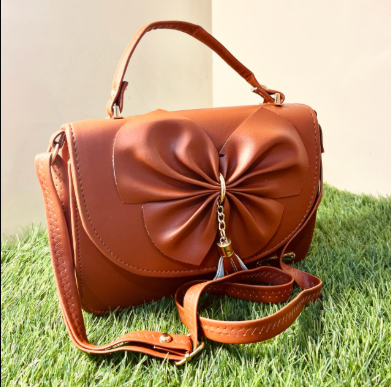
This is rarely discussed but dramatically affects how polished you look.
| Body Shape | Best Bag Shapes | Avoid |
|---|---|---|
| Petite (Under 5’3″) | Small bucket bags, mini satchels, east-west rectangles | Wide hobo bags, oversized totes |
| Tall (Over 5’8″) | Large slouchy hobos, extra-long crossbodies | Micro-bags, short-strap shoulder bags |
| Pear-Shaped (Wider hips) | Bags that sit above the waist (short shoulder straps) | Bags that rest exactly at hip level—they widen the silhouette |
| Apple-Shaped (Broader midsection) | Structured boxes and frame bags with sharp angles | Slouchy, unstructured bags that mimic roundness |
| Hourglass | Crescent-shaped bags, curved bottom totes | Rigid rectangular briefcases—they fight your curves |
Golden Rule: The bag’s bottom edge should never cut across the widest part of your torso. Adjust the strap to sit 2–3 inches above or below that point.
Part 4: Seasonal Bag Rotation (Protect Your Investment)
Rotating bags isn’t just about fashion—it is preservation science. Leather absorbs moisture from your hands, the air, and temperature changes. Wearing the same bag daily traps that moisture, leading to:
- Stretched handles
- Cracked corners
- Mildew in humid climates
Seasonal Rotation Calendar
| Season | Recommended Material | Color Palette | Storage Tip |
|---|---|---|---|
| Spring | Lightweight canvas, perforated leather | Pastels, beige, white | Dust bags only—no plastic wraps |
| Summer | Straw, rattan, woven nylon | Bright coral, turquoise, lemon | Store away from direct sunlight (fades weaves) |
| Monsoon/Rainy | Textured leather (pebbled or saffiano), PVC-coated canvas | Dark olive, navy, rust | Wipe dry within 2 hours of getting wet |
| Autumn/Winter | Smooth full-grain, suede, shearling | Burgundy, forest green, chocolate | Use cedar sachets inside to absorb dampness |
Part 5: The 5-Minute Daily Bag Care Routine
You do not need expensive spa treatments. Do this every evening when you empty your bag:
- Shake upside down over a trash can—crumbs and dust scratch interior linings.
- Wipe hardware with a dry glasses cloth (fingerprints cause tarnishing).
- Rotate the strap position—if you always carry it on the right shoulder, the left side remains stiff. Alternate weekly.
- Stuff with undyed tissue paper overnight—this absorbs residual moisture and maintains shape.
- Condition leather once every 45 days using a lanolin-free conditioner (lanolin attracts dust).
Warning: Never use saddle soap on finished leathers—it strips the factory-applied sealant and makes the bag absorb water like a sponge.
Part 6: Budget vs. Luxury – The Real Cost Breakdown
Let us do the math on a $300 bag versus a $70 bag over 5 years.
| Expense Factor | $300 Full-Grain Bag | $70 PU Bag |
|---|---|---|
| Upfront Cost | $300 | $70 |
| Replacement frequency | Once in 5 years | Every 14 months (approx. 4 times in 5 years) |
| Total spent in 5 years | $300 | $280 |
| Resale value after 3 years | ~$150 (50% recouped) | $0 (no resale market) |
| Net cost to you | $150 | $280 |
The affordable bag actually costs you more money over time—and you get inferior aesthetics, comfort, and reliability during those years. This is why stylists recommend “buy less, buy better.”
Part 7: Top 10 Most-Asked Questions (FAQ)
Q1. Can I carry a brown bag with black shoes?
Yes, but keep the undertones consistent. Pair a warm tan bag with black shoes that have warm brown stitching or brass buckles. The shoe’s hardware should echo the bag’s hardware—this creates a visual bridge.
Q2. How do I remove pen marks from leather interior?
Dab (never rub) the spot with 70% isopropyl alcohol using a cotton swab. Immediately blot with a dry cloth. Test on a hidden corner first—some dyed leathers bleed.
Q3. Are designer bags worth it for everyday use?
Only if you buy from heritage houses that use full-grain leather and solid brass (e.g., brands with 50+ years of tannery partnerships). Entry-level designer bags ($400–$800) from contemporary brands often use the same materials as $200 mid-tier bags—you pay for the logo, not the leather.
Q4. What is the most durable bag color for humid climates?
Rust orange, mustard yellow, and deep teal. These colors contain higher pigment concentrations, which makes them more resistant to UV fading and sweat stains than pale pinks or beiges.
Q5. How tight should a crossbody strap be?
The bag should rest against your ribcage, not bounce against your hip bone. When you walk, the bag should move with you—not swing independently. Adjust so there is a 2-finger gap between the strap and your shoulder.
Q6. Can I put a leather bag in the freezer to remove odor?
Never. Freezing makes leather brittle and causes micro-cracks. Instead, stuff the bag with crumpled newspaper and leave it in a well-ventilated room for 48 hours—newsprint absorbs odors without damaging fibers.
Q7. Which bag shape is most secure against pickpockets?
A crossbody with a flap-over zipper (double closure). Thieves target open totes and backpacks because they can access them without unzipping. A flap adds an extra step that deters quick grabs.
Q8. Is vegan leather environmentally better?
Biodegradable alternatives like apple leather or cork are better. But standard PU vegan leather is petroleum-based, takes 200+ years to degrade, and sheds microplastics. Genuine animal leather from food-industry byproducts is actually more sustainable than virgin plastic-based PU.
Q9. How do I prevent my shoulder strap from slipping?
Wear a thin cotton tank top or a silk scarf under the strap—both create friction. Alternatively, choose straps with a textured underside (pebbled or suede-backed)—they grip fabric naturally.
Q10. What is the ideal number of bags to own?
Five: one tote, one crossbody, one satchel, one backpack-convertible, and one evening clutch. That covers work, casual, formal, travel, and emergency occasions. Anything beyond five is purely collector’s joy—not a necessity.
Final Checklist: Before You Click “Buy”
Ask yourself these 5 questions before purchasing any bag:
- □ Does this bag fit my actual daily carry (not my aspirational carry)?
- □ Does the strap drop sit comfortably at my natural waist/hip height?
- □ Is the material appropriate for my climate (rainy vs. dry)?
- □ Can this bag transition across at least 3 different outfits in my wardrobe?
- □ Am I buying this for the logo or for the leather quality?
The Bottom Line
Prioritize full-grain leather or high-grade nylon over cheap PU. Check the stitching and hardware before you check the price tag. And most importantly, wear your bag with confidence—because the most attractive accessory a woman carries is her own self-assurance.
A woman’s handbag is an investment in her daily efficiency and self-expression. You do not need to follow every micro-trend that TikTok pushes. Instead, build a capsule collection around your actual routine—work, weekends, formal events, travel, and emergencies.
What is your current everyday bag?
Drop a comment below—tell us your favorite style and the one problem you wish your bag would solve. We read every reply and handpick the best ones for our next buyer’s guide!